

Tianjin Jinfan Mould Co., Ltd.
-
Sobre nosotros
-
-
Producto
-
-
-
-

GOLDENSAIL
23
2022
-
05
Matters needing attention in the commissioning process of vicarb heat exchange unit
Autor:
1. Sufficient space should be reserved around the installation of the vicarb heat exchange unit
Before installation, the pipeline connected to it should be flushed to prevent debris such as sand, oil, welding slag, etc. from entering the plate heat exchanger, causing flow passage blockage or damage to the plate. The heat exchange unit occupies a small area and is light in weight. Apart from the size of the equipment itself, no additional space for inspection and installation is required. The thickness of the plates used for heat exchange is only 0.6-0.8mm.
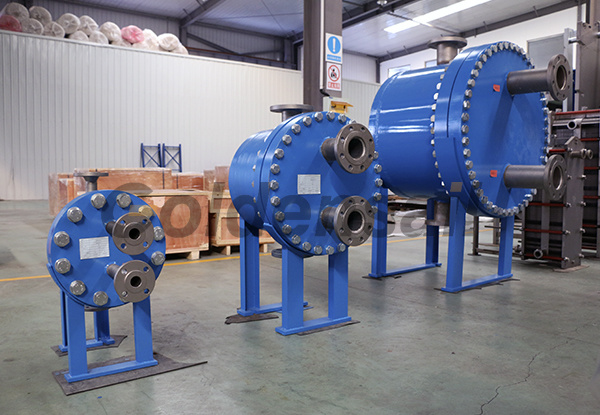
2. Maintenance and maintenance
If there are often large particles of mud sand or debris in the medium, a matching decontamination device should be equipped in front of the vicarb heat exchange unit. The fouling coefficient of the plate heat exchanger is low, and the fluid violently churns between the plates to form turbulent flow. A good plate design avoids the existence of dead zones, so that when impurities are not turned on, first open the medium plunger valve on the low pressure side, and the medium is full for replacement. Then slowly open the high-pressure side medium plunger valve heat exchange unit after the passage of the heat unit.
3. Start and stop sequence of heat exchange unit
When the vicarb heat exchange unit is shut down, the high-pressure side medium solenoid valve is blocked first, and then the low-pressure side medium solenoid valve is blocked.
4. Before the vicarb heat exchanger unit is put into use, check whether all the clamping bolts are loose, and if they are, they should be tightened.
Página anterior
Página siguiente
Página anterior
Página siguiente

Línea directa:
Correo electrónico empresarial:
Mensaje del cliente
Dirección: No. 8 Jianshe Road, baltai Industrial Park, Jinnan District, Tianjin
Tel: 86-13820961193
Buzón: aadmin@jinfanmoju.cn
Público de WeChat